


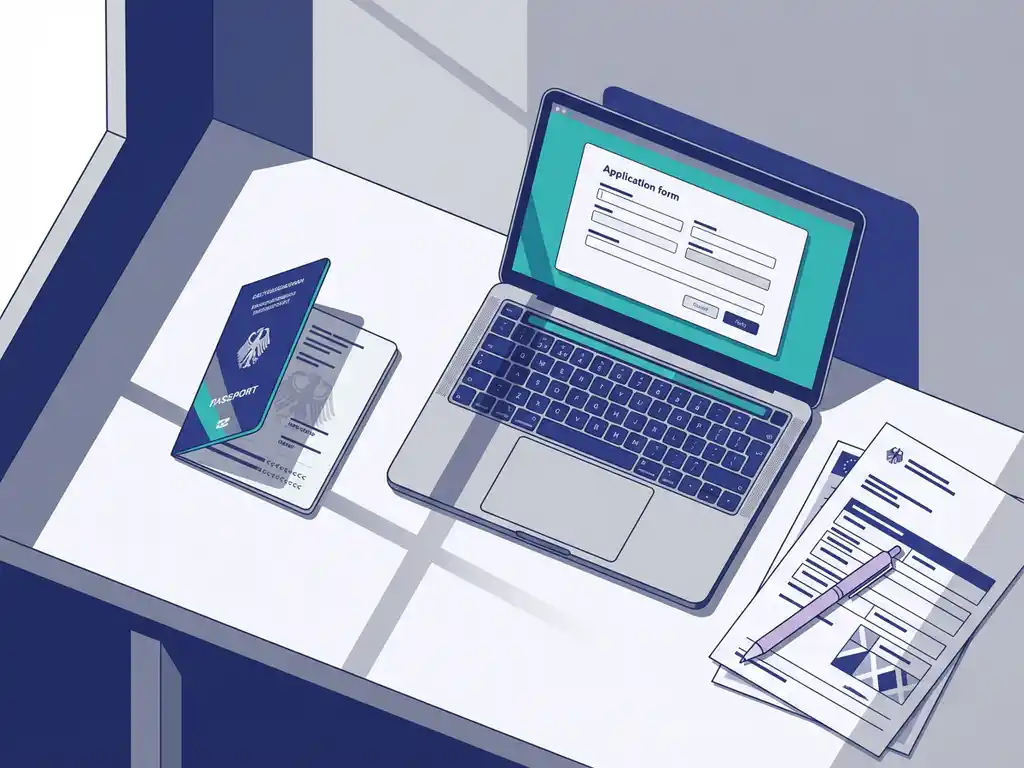
Yes, you can apply for a German work permit without having a job offer through several pathways designed for skilled professionals. The most common route is the Job Seeker Visa, which allows you to enter Germany for up to six months to search for employment. Other options include self-employment permits and certain qualifications-based visas that do not require pre-arranged employment when relocating to Germany.
What are your options for getting a German work permit without a job offer?
Germany offers three main pathways for skilled professionals seeking a work permit without a pre-arranged job offer. The Job Seeker Visa (Aufenthaltserlaubnis zur Arbeitsplatzsuche) allows qualified individuals to enter Germany for up to six months specifically to search for employment. This visa requires either a recognised university degree or a vocational qualification equivalent to German standards.
The self-employment route enables entrepreneurs and freelancers to establish a business in Germany. This option requires demonstrating sufficient financial resources, relevant qualifications, and a viable business plan. Freelancers in certain professions, such as IT, consulting, or the creative industries, often find this pathway accessible.
Alternatives to the EU Blue Card exist for highly skilled professionals with specific qualifications. While the standard EU Blue Card requires a job offer, certain academic and professional credentials can open pathways to residence permits that allow you to search for a job once you are in Germany. These routes typically apply to professionals in shortage occupations or those with exceptional qualifications in fields such as engineering, healthcare, or technology.
How does the German Job Seeker Visa actually work?
The German Job Seeker Visa grants you a six-month residence permit specifically for finding employment that matches your qualifications. During this period, you cannot work in Germany, but you can attend job interviews, network with employers, and complete application processes for positions. Once you secure a job offer, you can convert your Job Seeker Visa into a work permit without leaving the country.
The application process begins at a German consulate in your home country. You will need to demonstrate that your qualifications are recognised in Germany through credential evaluation services such as anabin or ZAB. Financial proof showing that you can support yourself for six months (typically around €5,000–€6,000) is essential, as you cannot earn income during the job-search period.
Upon arrival in Germany, you must register your address and may be able to extend your visa once for an additional six months if you can show serious job-search efforts. The visa allows multiple entries, so you can travel during your stay. When you find employment, your new employer will help convert your status to a work permit, streamlining the transition to working in Germany.
What qualifications and documents do you need to apply without a job offer?
You need either a recognised university degree or a vocational qualification that is equivalent to German standards. University graduates must have their degrees evaluated through the anabin database or obtain formal recognition from ZAB (Central Office for Foreign Education). Vocational qualifications require assessment by the relevant German authorities to confirm that they meet local professional standards.
Language proficiency requirements vary by pathway and profession. Many positions require German language skills at B1 level or higher, though some international companies and tech roles may accept English proficiency. Professional fields such as healthcare typically mandate specific German language certifications.
Essential documentation includes your passport, educational certificates with official translations, proof of financial resources, health insurance coverage, and a clean criminal record certificate. Financial proof must demonstrate that you can support yourself throughout your stay—typically €934 per month for the Job Seeker Visa period. All foreign documents require apostilles or consular legalisation, as well as certified German translations by sworn translators.
Professional experience documentation strengthens your application. Employment references, professional certifications, and evidence of specialised skills help demonstrate your value to the German job market and improve your chances of securing a German corporate immigration permit.
How long does the application process take, and what can you expect?
Processing times for German work permit applications without job offers typically range from 4 to 12 weeks, depending on your location and the specific visa type. Job Seeker Visa applications generally take 6 to 8 weeks at German consulates, while self-employment permits may require 8 to 12 weeks due to additional business plan evaluations and financial assessments.
The application process involves several stages: initial document preparation and translation (2 to 4 weeks), credential recognition procedures (4 to 8 weeks for academic qualifications), consulate appointment scheduling and processing (4 to 8 weeks), and final decision notification. Peak application periods during the summer months may extend these timeframes.
Factors that can delay applications include incomplete documentation, unclear credential recognition, insufficient financial proof, or the need for additional supporting evidence. Thorough preparation significantly reduces processing delays. Consulates may request additional documents or clarification during review, adding 2 to 4 weeks to the timeline.
We recommend starting your application process 3 to 4 months before your intended travel date to allow adequate time for document preparation, translation, and processing. Professional support from German mobility services can streamline the process and help you avoid common delays that extend application timelines.
Planen Sie einen Umzug? Sprechen wir.
Profitieren Sie von der Erfahrung eines Teams, dem seit 1982 weltweit vertraut wird.
How ProfOrg helps with German work permit applications
ProfOrg provides comprehensive support for professionals seeking German work permits without job offers, streamlining the complex application process from start to finish. Our relocation management services include:
• Complete document preparation and review to ensure all requirements are met
• Credential evaluation assistance and guidance through anabin and ZAB processes
• Professional translation coordination with certified German translators
• Financial planning support to meet visa requirements
• Ongoing consultation throughout the application timeline
• Post-arrival support for visa conversion and job search strategies
Don’t navigate the German work permit process alone—contact us today to transform your career aspirations into reality with expert guidance every step of the way.
Moving to Germany without a job offer requires careful planning and proper documentation, but the available pathways provide genuine opportunities for skilled professionals. The Job Seeker Visa offers the most straightforward route, allowing you to explore the German job market while maintaining legal residence status. Success depends on thorough preparation, meeting qualification requirements, and demonstrating financial stability throughout the process.
Disclaimer: This article is for general informational purposes only and does not constitute legal advice under §2(1) RDG. Proforg is not a law firm and does not provide legal advice. We cooperate with qualified legal partners when legal consultation is required. Please contact us for support with your specific situation.